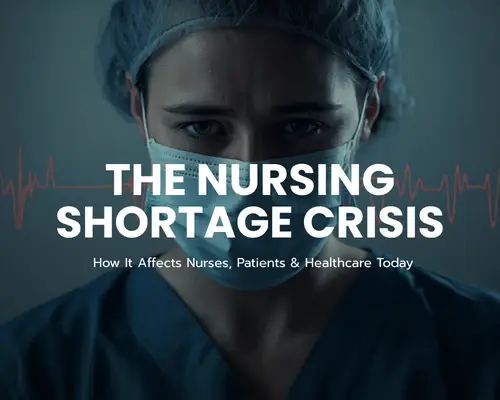
The Nursing Shortage Crisis: How It Affects Nurses, Patients, and Healthcare Today
If you’ve worked in healthcare for any length of time, you’ve probably felt it.
The unit feels busier than ever. Call bells never stop ringing. Patient assignments seem heavier. Overtime shifts are constantly available. Breaks are often delayed or skipped. And many nurses find themselves asking the same question:
”How long can we keep working like this?”
The nursing shortage is no longer a future concern. It is happening right now in hospitals, nursing homes, rehabilitation centers, clinics, and healthcare facilities across the country.
While headlines often mention staffing shortages, they rarely capture what nurses experience on the front lines every day. Behind every staffing shortage are nurses trying their best to provide safe, compassionate care while managing increasing demands and limited resources.
This issue affects not only healthcare workers but also patients, families, and entire communities.
Let’s talk about the reality of the nursing shortage and why it matters to everyone.
What Is Causing the Nursing Shortage?
There is no single cause behind the nursing shortage. Instead, multiple factors have created a perfect storm within healthcare.
Many experienced nurses have retired or left the profession entirely. Others transitioned into non-bedside roles due to burnout, stress, or the desire for better work-life balance.
At the same time, healthcare facilities continue experiencing increased patient volumes. People are living longer and often require more complex medical care than previous generations.
Nursing schools are also facing challenges. Limited faculty, clinical placement shortages, and program capacity restrictions make it difficult to educate enough new nurses to meet growing healthcare demands.
As a result, the demand for nurses continues to exceed the available workforce in many areas.
The Reality of Working Short-Staffed
Many nurses don’t need statistics to understand the nursing shortage.
They live it.
Working short-staffed often means caring for more patients than feels manageable. Nurses may find themselves juggling multiple responsibilities while trying to maintain quality care and patient safety.
A typical shift can include:
Medication administration
Patient assessments
Admissions
Discharges
Physician communication
Family education
Documentation
Responding to emergencies
Emotional support for patients and families
Now imagine doing all of that while caring for additional patients because staffing is limited.
The pressure can feel overwhelming.
Many nurses begin their shifts determined to provide excellent care, only to leave feeling frustrated because there simply were not enough hours in the day to do everything they wanted for their patients.
The Impact on Patient Care
Nurses enter healthcare because they want to help people.
Most nurses genuinely care about their patients and want to provide safe, thorough, compassionate care.
However, staffing shortages can make this increasingly difficult.
When nurses are stretched thin, they may have less time available for patient education, emotional support, and individualized care.
Patients may experience:
Longer response times to call bells
Delays in non-urgent care
Reduced one-on-one interaction
Increased frustration and anxiety
It’s important to understand that nurses are rarely choosing to delay care. In many situations, they are prioritizing multiple urgent needs simultaneously.
Most nurses wish they had more time with every patient.
The reality is that staffing shortages often force difficult prioritization decisions throughout the shift.
The Emotional Toll on Nurses
One of the most overlooked consequences of the nursing shortage is the emotional impact on healthcare workers.
Many nurses experience significant stress when they feel unable to provide the level of care they believe patients deserve.
This can create feelings of:
Frustration
Anxiety
Guilt
Emotional exhaustion
Compassion fatigue
Some nurses find themselves replaying their shifts long after they get home.
They think about tasks they didn’t have enough time to complete.
They worry about patients.
They question whether they did enough.
Over time, this emotional burden can become incredibly heavy.
Burnout Is Becoming More Common
Burnout has become one of the biggest concerns facing the nursing profession today.
Burnout goes beyond feeling tired after a long shift.
It often includes:
Chronic exhaustion
Emotional detachment
Decreased job satisfaction
Feeling overwhelmed
Difficulty recovering between shifts
Many nurses who once felt passionate about their work begin feeling emotionally drained.
Some start questioning whether they can continue working under current conditions.
Others leave bedside nursing entirely.
Unfortunately, every nurse who leaves due to burnout places additional strain on those who remain.
This cycle can become difficult to break.
Why Nurses Continue Showing Up
Despite the challenges, nurses continue showing up every day.
They continue advocating for patients.
They continue providing comfort during difficult moments.
They continue supporting families during some of the most challenging times of their lives.
Nurses witness joy, heartbreak, recovery, loss, hope, and resilience.
Even during difficult shifts, many nurses remain committed to making a positive difference.
Their dedication is one of the reasons healthcare continues functioning despite significant staffing challenges.
But dedication alone cannot solve a systemic problem.
Nurses need support, resources, and sustainable working conditions.
What Can Healthcare Organizations Do?
Addressing the nursing shortage requires long-term solutions.
Healthcare organizations can help by focusing on:
Improving Staffing Levels
Safe staffing practices can improve both nurse satisfaction and patient outcomes.
Supporting Nurse Well-Being
Mental health resources, wellness programs, and supportive leadership can make a significant difference.
Reducing Administrative Burdens
Many nurses spend substantial time on documentation and non-clinical tasks. Streamlining processes may allow more time for direct patient care.
Encouraging Professional Development
Opportunities for growth, education, mentorship, and career advancement can improve retention.
Listening to Nurses
Frontline nurses often have valuable insights regarding workflow improvements and patient care challenges.
Including nurses in decision-making conversations can lead to meaningful solutions.
What Nurses Can Do for Themselves
While systemic change is necessary, individual self-care remains important.
Nurses cannot pour from an empty cup indefinitely.
Some healthy strategies include:
Prioritizing adequate rest
Maintaining healthy boundaries
Seeking emotional support
Connecting with trusted colleagues
Practicing stress-management techniques
Taking vacation time when possible
Seeking professional help when needed
Self-care is not selfish.
It is essential.
A healthy nurse is better equipped to care for others.
The Future of Nursing
The nursing profession remains one of the most respected and impactful careers in healthcare.
While the challenges are real, so is the opportunity for positive change.
Healthcare leaders, policymakers, educators, and nurses themselves all play important roles in shaping the future of the profession.
Addressing staffing shortages will require commitment, investment, and collaboration.
Most importantly, it will require recognizing that nurses are not unlimited resources.
They are human beings.
They deserve safe working environments, emotional support, professional respect, and sustainable workloads.
Final Thoughts
The nursing shortage affects far more than staffing schedules.
It impacts nurses, patients, families, healthcare facilities, and communities.
Every day, nurses continue providing care under challenging circumstances. They show resilience, compassion, and professionalism even when resources are stretched thin.
As conversations about healthcare continue, it is important to remember that supporting nurses ultimately means supporting patients as well.
Because when nurses thrive, patient care improves.
And that benefits everyone.